Context
CJ Logistics Indonesia operates a large-scale transportation network supporting Warehouse and Transportation Management operations across Indonesia. As the business scaled, the company began developing a new integrated Transportation Management System (TMS) to keep pace with growing operational demands. I was the sole designer responsible for the Mobile Driver Application within this initiative, the interface drivers and vendors use to execute shipments in the field, from receiving assignments to submitting proof of delivery.
Problem
Field execution activities, including delivery status updates and Proof of Delivery (POD) administration, previously relied on manual coordination through spreadsheets and messaging tools. As shipment volume grew, this made real-time visibility harder to maintain and left room for inconsistency in how updates were recorded. The new mobile experience also needed to work for drivers with varying levels of tech familiarity, operating on the road with mobile devices under unstable connectivity. Those were conditions the interface had to be designed for, not around.
Research and Approach
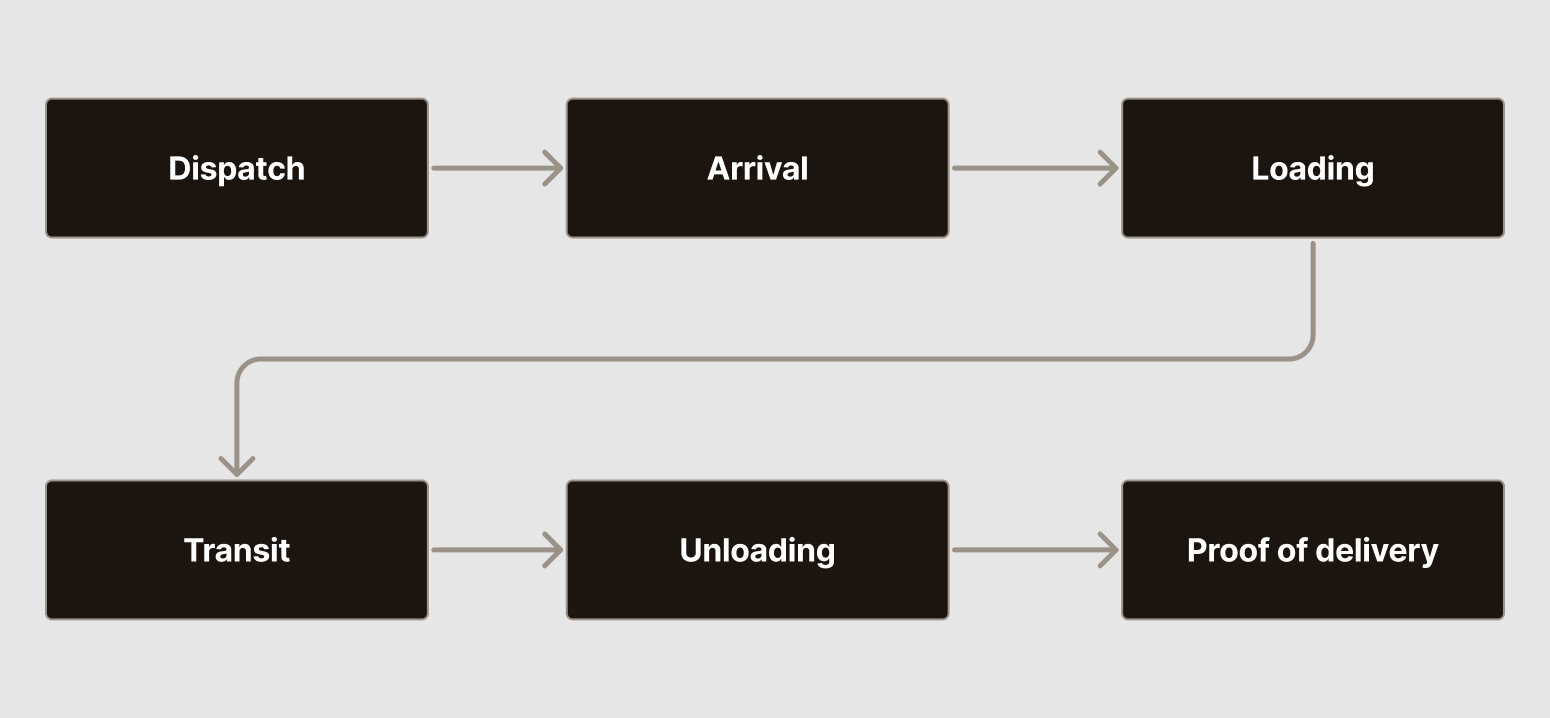
Requirements were derived from the transportation team's business requirement documentation, which had already captured operational pain points of the manual process. My role was translating those requirements into a structured, stage-based flow: mapping each point in a driver's trip (dispatch, arrival, loading, transit, unloading, POD) into clear states, rather than starting from field interviews.
Decision
Two decisions shaped the core experience:
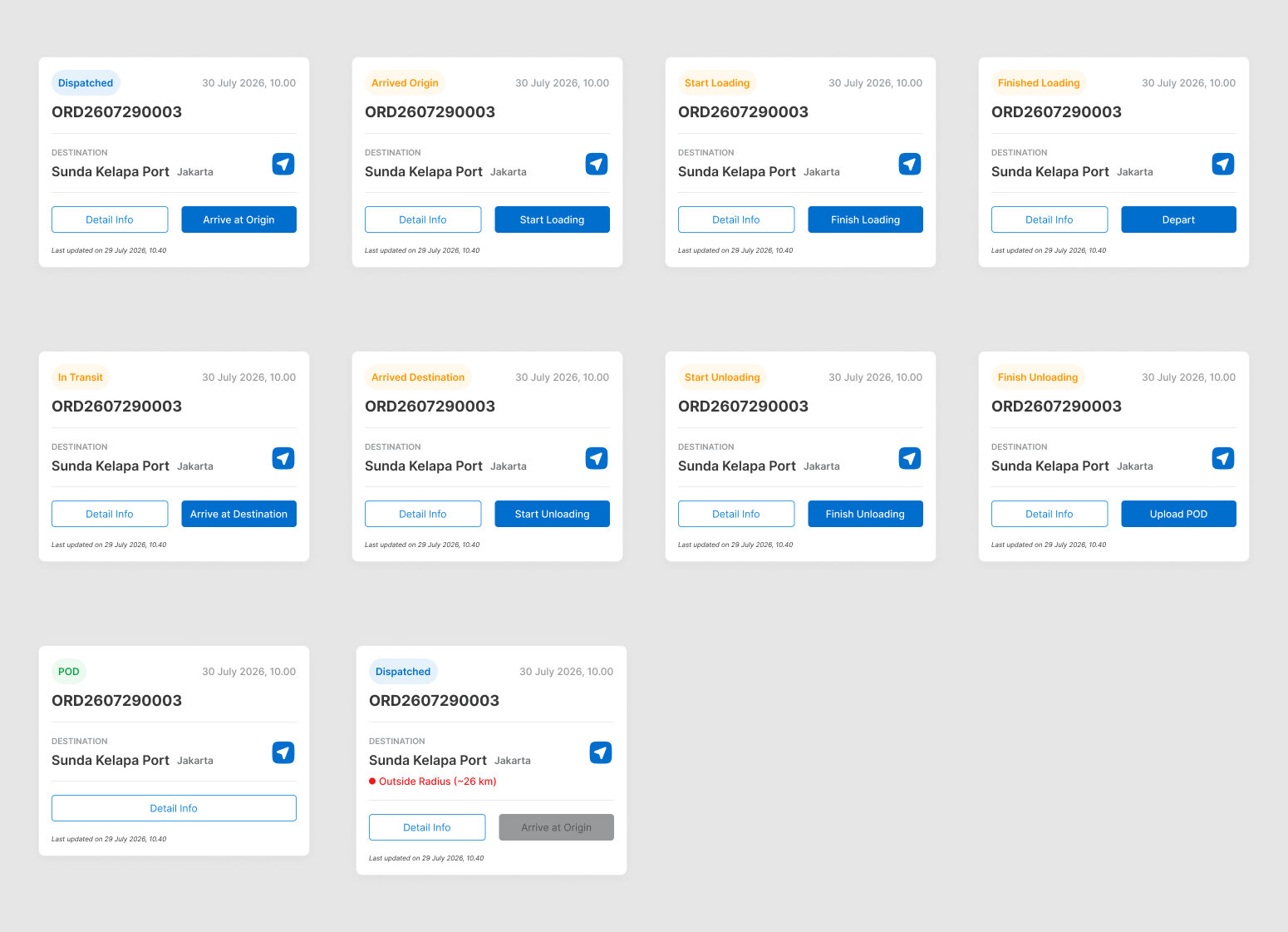
- Geofence-gated actions: Status buttons like "Arrived at Origin" or "Arrived at Destination" stay disabled until the driver is physically within the location radius. This prevents status updates from being logged before they actually happen.
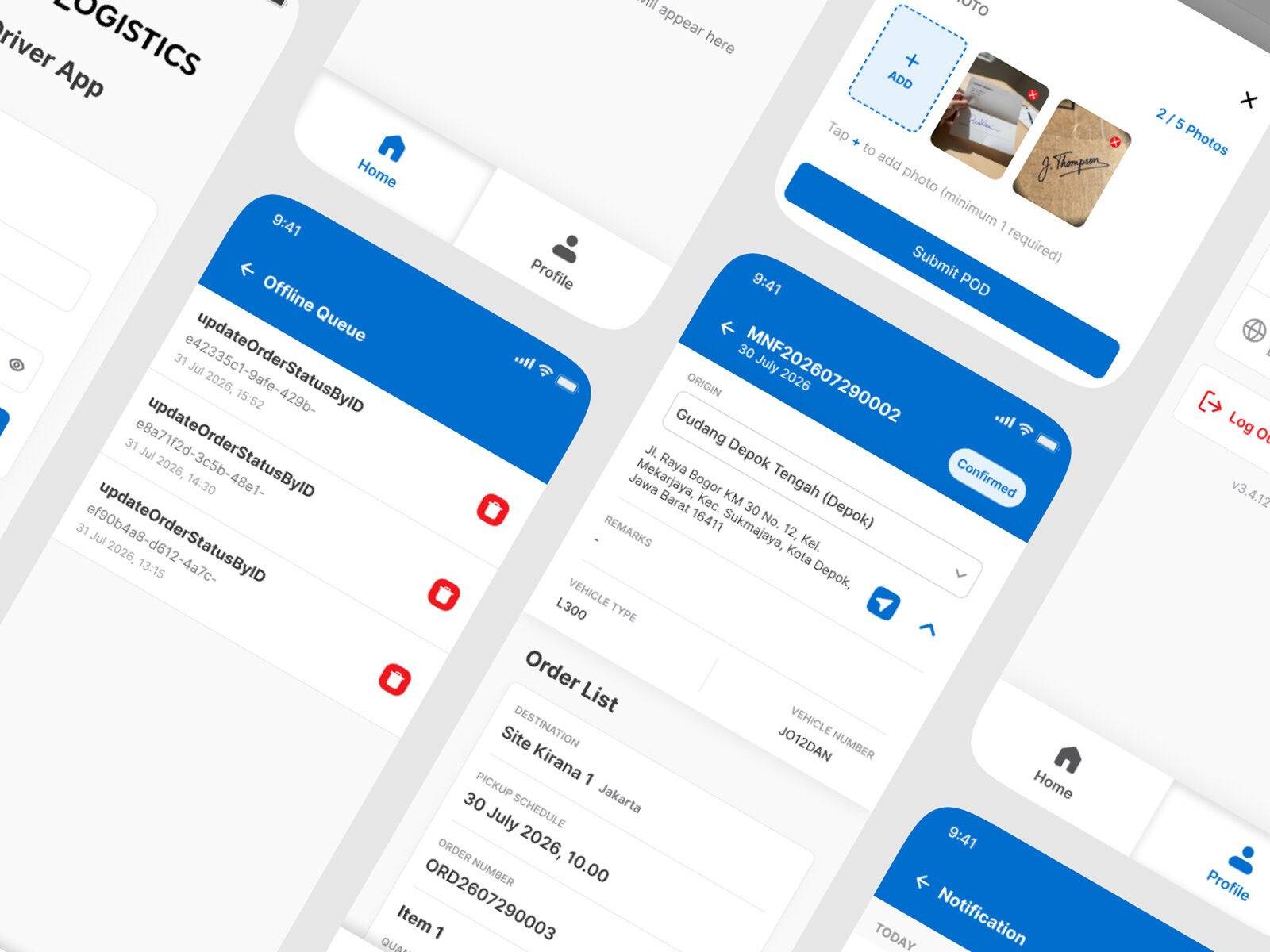
- Offline queue with manual sync: Status updates are cached locally and synced once connectivity returns, so drivers aren't blocked by poor signal in the field.
On the interface itself, I kept the design minimal and low friction: short labels instead of dense text, large tap targets, and clear color-coded status badges. It's built for drivers glancing at their phone mid-task, not reading through a manual.
Outcome
The application is currently in active development, with a planned go-live in the fourth quarter of 2026. Development has been shaped through ongoing collaboration with the engineering team to validate flows like geofence-gated status updates and offline sync against real device and network constraints ahead of rollout.